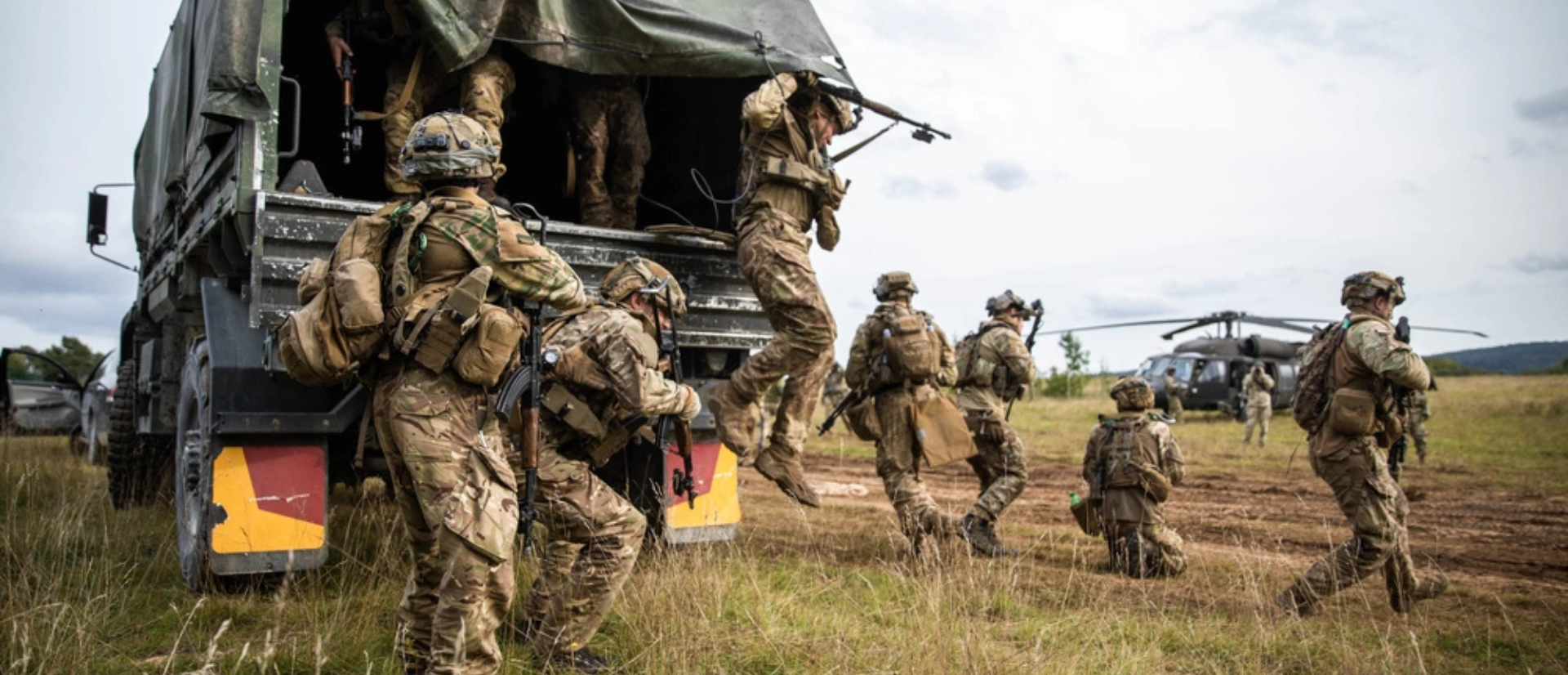
A Primer on Ukrainian Special Forces: Beyond Joint
The article “A Primer on Ukrainian Special Forces” by Stringer and Vivdych at Joint Force Quarterly provides a corrective to a persistent Western misunderstanding: Ukrainian special operations forces (SOF) are not a unified, centrally controlled enterprise akin to USSOCOM, but rather a dispersed, interministerial ecosystem rooted in Soviet institutional legacy. This structural reality has direct implications for how Ukraine fights, adapts, and partners with the West.
The authors’ central argument is that Ukrainian SOF are best understood as “beyond joint.” Unlike the U.S. model, where SOF are consolidated under a single combatant command, Ukrainian special operations capabilities are distributed across the Ministry of Defense, intelligence services, internal security organizations, and law enforcement agencies. This includes the Ukrainian Special Operations Forces Command (USOFCOM), as well as entities such as the Security Service’s Special Operations Center Alfa (SOCA), the National Police’s KORD units, the Border Guard’s DOZOR units, and likely special elements within the Foreign Intelligence Service. The result is a heterogeneous force structure with overlapping missions, varied authorities, and uneven coordination.
The dispersion, adaptability, and hybridization of Ukrainian special forces… may be less a liability than an evolutionary response to modern war… in a conflict characterized by contested rear areas and partisan activity, a more networked and less centralized architecture may offer advantages in resilience and operational reach.
This fragmentation is deliberate. It reflects a deeper historical lineage tracing back to Soviet spetsnaz. In contrast to Western SOF—where “special” denotes elite units performing specific missions—Soviet spetsnaz referred broadly to units with specialized capabilities or politically sensitive roles. These units were distributed across multiple state organs, including military intelligence (GRU), the KGB, and internal security forces, creating a system of institutional competition and redundancy. Ukraine inherited this model after 1991, along with several GRU brigades and KGB-derived units, embedding dispersion into its security DNA.